Home
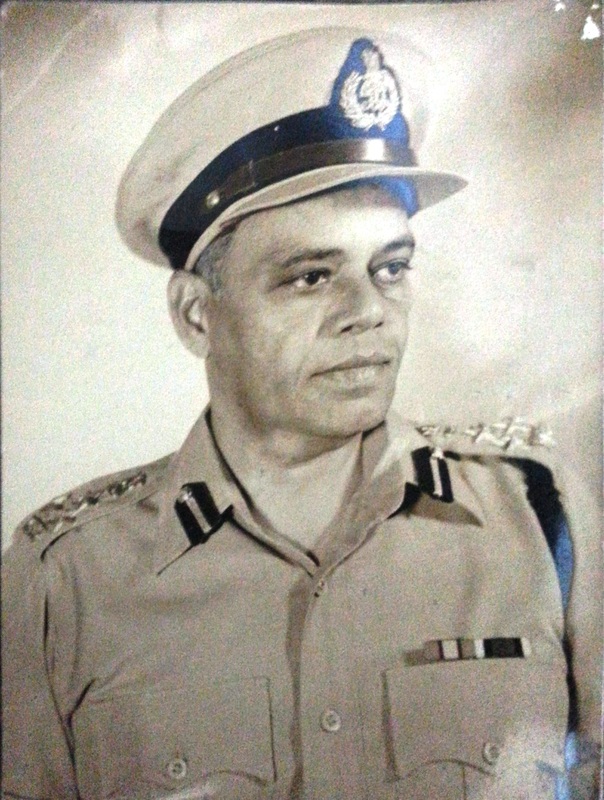
Mahmood bin Muhammad
1924–2013
6 Muharram 1343 to 12 Dhul-Hijjah 1434
Former Indian Ambassador Mahmood bin Muhammad, a leading Indian police theoretician, passed away on October 18, 2013, at the age of 89.
Throughout his life, Mr. Muhammad maintained a high reputation as an efficient and effective administrator and a suave, perceptive and erudite diplomat known for his honesty, fairness, incorruptibility and moral integrity.
Remarkable Career
Mr. Muhammad had a remarkably diverse career spanning seven decades. After getting his M.A in English Honors from Madras Christian College, and his B.L. from Madras Law College, he started his career as an English lecturer and a Munsif/Magistrate. He then distinguished himself for over three decades at the highest levels in the Indian Police Service (IPS 1953 cadre), including serving as Additional Home Secretary and Inspector General of Prisons & Director of Correctional Services, Government of Andhra Pradesh; as Director-in-charge, S.V.P. National Police Academy, Hyderabad; and as Deputy Director (Research), Bureau of Police Research & Development, Ministry of Home Affairs, Government of India.
After his retirement from the Indian Police Service, Mr. Muhammad continued to serve the country in diverse capacities for more than three decades. He had the distinction of serving as Ambassador of India to Saudi Arabia from 1985 to 1987. He served on India’s Planning Commission on Social Defense and as India’s correspondent with the UN Secretariat in the field of prevention of crime and treatment of offenders. He was borne on the UNDP's International Roster of Experts in the field of crime prevention and public administration since 1976, and was sponsored for a number of foreign assignments both by the Government of India and by the United Nations. He was also invited to attend an international seminar at the Arab Security Studies and Training Centre, Riyadh, and deliver a lecture to the trainees of the Institute of Diplomatic Training & Studies, Ministry of Foreign Affairs, Saudi Arabia.
As the Indian Ambassador to Saudi Arabia, he played a key role in consolidating and expanding bilateral ties between the two countries. He coordinated the Indian effort involved in holding the Indo-Saudi Joint Commission meeting at the Finance Ministers’ level between the two countries in April 1986. He also got Saudi royal concurrence for the appointment of a Defence Attaché in the Indian Embassy for the first time. His style as Ambassador of reaching out to the Indian community in Saudi Arabia endeared him to them. His crucial role in expanding the Indian Embassy schools in Jeddah, Riyadh and Dammam, and in strengthening their administrative structures, has left an indelible imprint on their hearts and minds to this day. That is one of his lasting legacies. The Jeddah school is perhaps the largest school of its kind in the world today, and is currently attended by 18,000 students.
In 2006, Mr. Muhammad was awarded the prestigious Rajiv Gandhi Sadbhavana Award for his contributions towards the promotion of communal harmony and peace in India.
Right until his death, Mr. Muhammad was a senior Trustee of H.E.H. The Nizam’s Charitable and Other Trusts and, in that capacity, he served as a Governing Council member of the Nizam’s Institute of Medical Sciences. He was associated with several other educational, cultural, medical and philanthropic organizations in India. He was also the President of the Abul Kalam Azad Oriental Research Institute in Hyderabad for many years.
Poet, Prolific Writer and Speaker
A poet and a prolific writer and speaker on an amazingly broad range of subjects, Mr. Muhammad published eight books, including his autobiography, “A Policeman Ponders”, and the titles “Religion, Politics and Good Governance” (an Indian and an expanded US edition), "Anatomy of Terrorism", "Fundamentals of Fundamentalism," “A New Image for the Police”, and “Fantasia”, a collection of his poems. He was actively sought as a guest lecturer and writer on a variety of topics, seminars for training of senior police, judicial, administrative and correctional officers throughout India and abroad. He was widely sought after by the Indian television and print media for his commentaries on major political and cultural events.
In his Foreword to the 2012 US edition of Mr. Muhammad’s book, the Indian Minister for External Affairs, Mr. Salman Khurshid wrote:
“Reading Janab Mahmood bin Muhammad’s “Religion, Politics and Good Governance” reminds one of the ‘Men who ruled India.’ Amongst the legendary civil servants and officials who have served India since Independence, there are but a few who stand out for their ability to traverse vast territories of thought beyond the area of their direct professional experience and specialization. There are even fewer who have a special flair in the matter of expression and an ability to cut across language barriers. The author of this remarkable collection of articles undoubtedly stands tall amongst the tallest of the men and women who served India with distinction.”
In the Foreword to Mr. Muhammad's autobiography published in 1999, Prof. Hasan Askari of London (listed as one of the eight Muslim thinkers of the century in Kenneth Cragg's The Pen and the Faith) wrote thus:
"Here is the life story of an Indian Muslim of Arab origin who aspired to reach for the stars and made it. During a span of fifty years after Independence, he was destined by Providence to hold a number of important positions and observe the wide spectrum of human behavior: as an academician and a judge; as a policeman and a prisons official; as a trainer and a researcher; as a bureaucrat and a U.N. expert and, finally, as a finance man and a diplomat."
His granddaughter, Noura Khan of Boston wrote this about him, hours after his death:
"He was without a doubt the greatest man I've been blessed to know, a prolific writer with a keen intellect, a sparkle in his eye, and a deep laugh that warmed me to the bones. As I sit in his home writing this, the walls echo with the sound of his absence. His presence still lingers here, just as it will in the hearts of all those who loved him dearly. As for me, he was my inspiration, who I want to be when I "grow up," and the only beloved grandfather I've ever known. To say I'll miss him is an understatement. But I'll do my utmost to carry on his legacy in all of my thoughts and actions, forever honoring this man I adored. I'll love you always, my dearest Police Daddy. Inna lillahi wa inna ilayhi raji'oon (from God we come and to God we return)."
Mr. Muhammad is survived by his wife Anees Syed Husain, a daughter, two sons, 10 grandchildren and one great grandson.